
The Science
The Tree That Bleeds Red
An ancient resin, backed by modern research - meet the tree whose crimson "dragon's blood" powers every bottle of Dragonblood® serum.
Try Dragonblood Risk-FreeWhat Is Dragon's Blood?
Dragon's blood isn't a marketing name. It's the traditional name for the deep red resin tapped from the bark of a handful of remarkable trees - from Croton lechleri in the Amazon rainforest and Daemonorops draco in Southeast Asia to the Dracaena dragon trees of Asia. For centuries, communities have applied the sap directly to cuts, burns and irritated skin to protect it and speed healing - and today, dermatology and cosmetic science are catching up with what traditional medicine already knew.
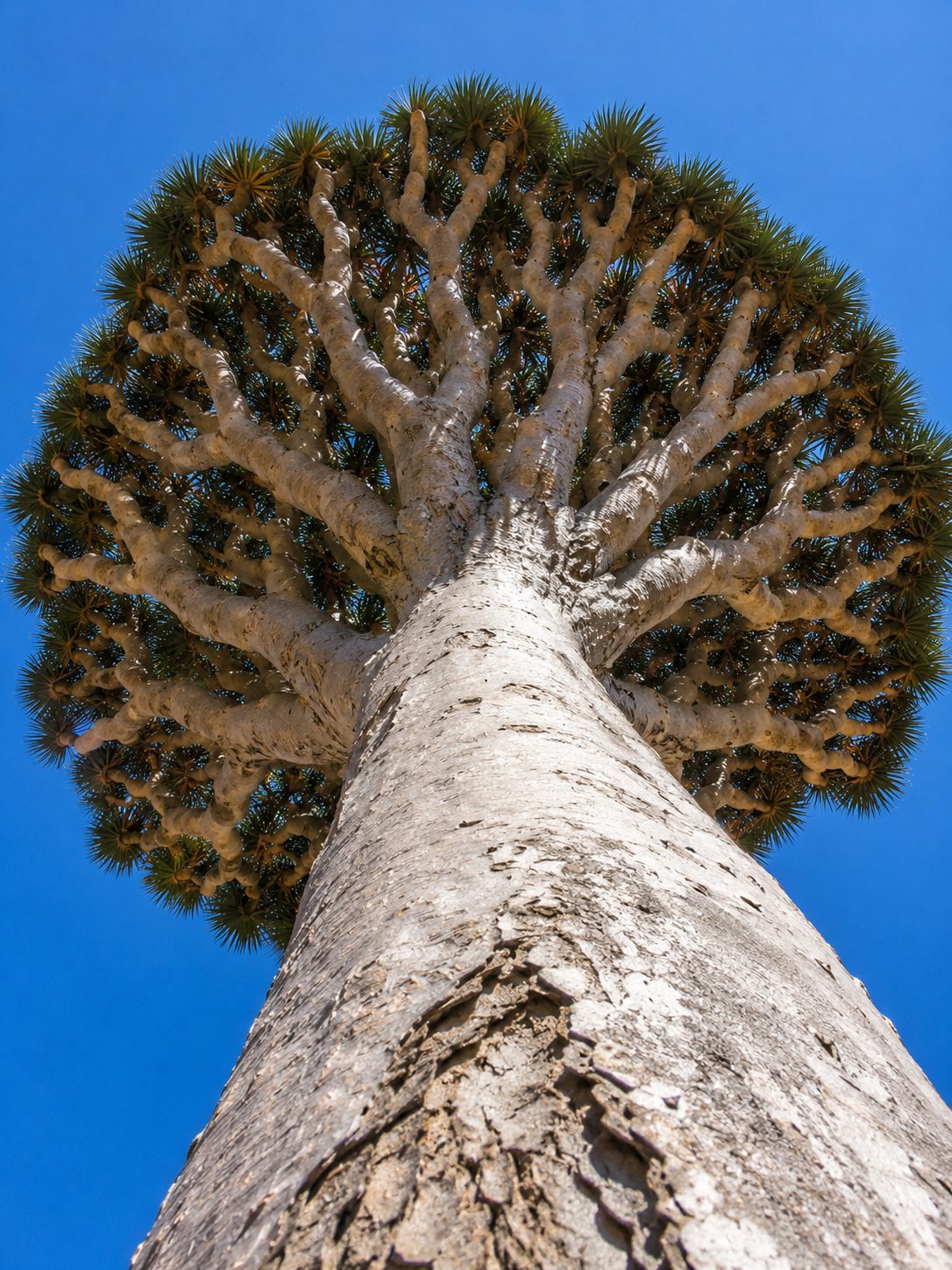
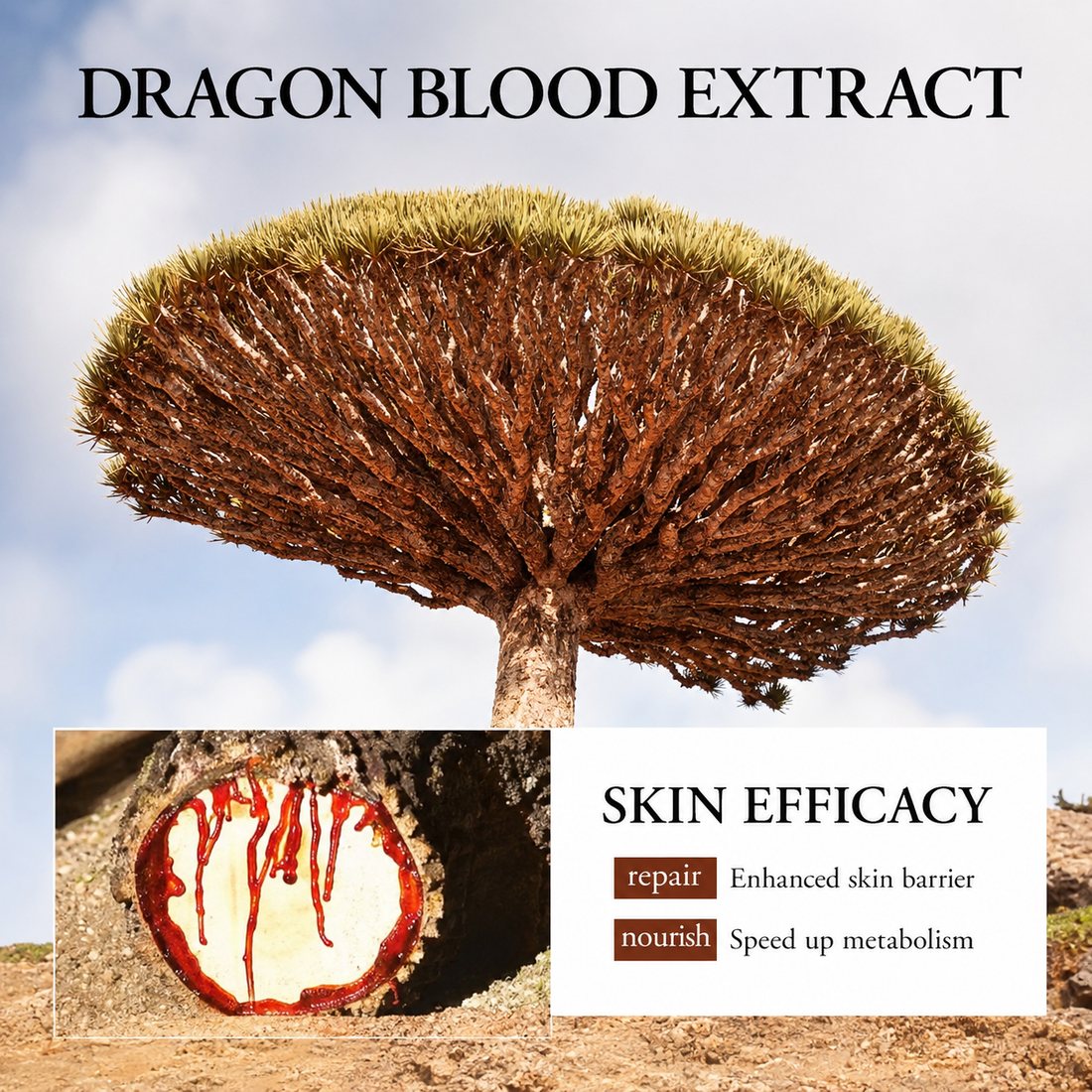
Dragon blood trees belong to Dracaena - a genus of 60 to 100 species, of which only a handful grow into true trees. A stout trunk is crowned by a dense, upturned umbrella of stiff, sword-like leaves.
Cut the bark, and the tree appears to bleed. A deep crimson resin seeps from the wound - the legendary dragon's blood that gives these trees their name and has been prized for thousands of years.
Our serum is based on the species found in southern China - Dracaena cochinchinensis, the Chinese dragon blood tree. It grows on limestone hills across Yunnan and neighbouring regions, and its resin has centuries of history in traditional Chinese practice.
Where Our Trees Grow
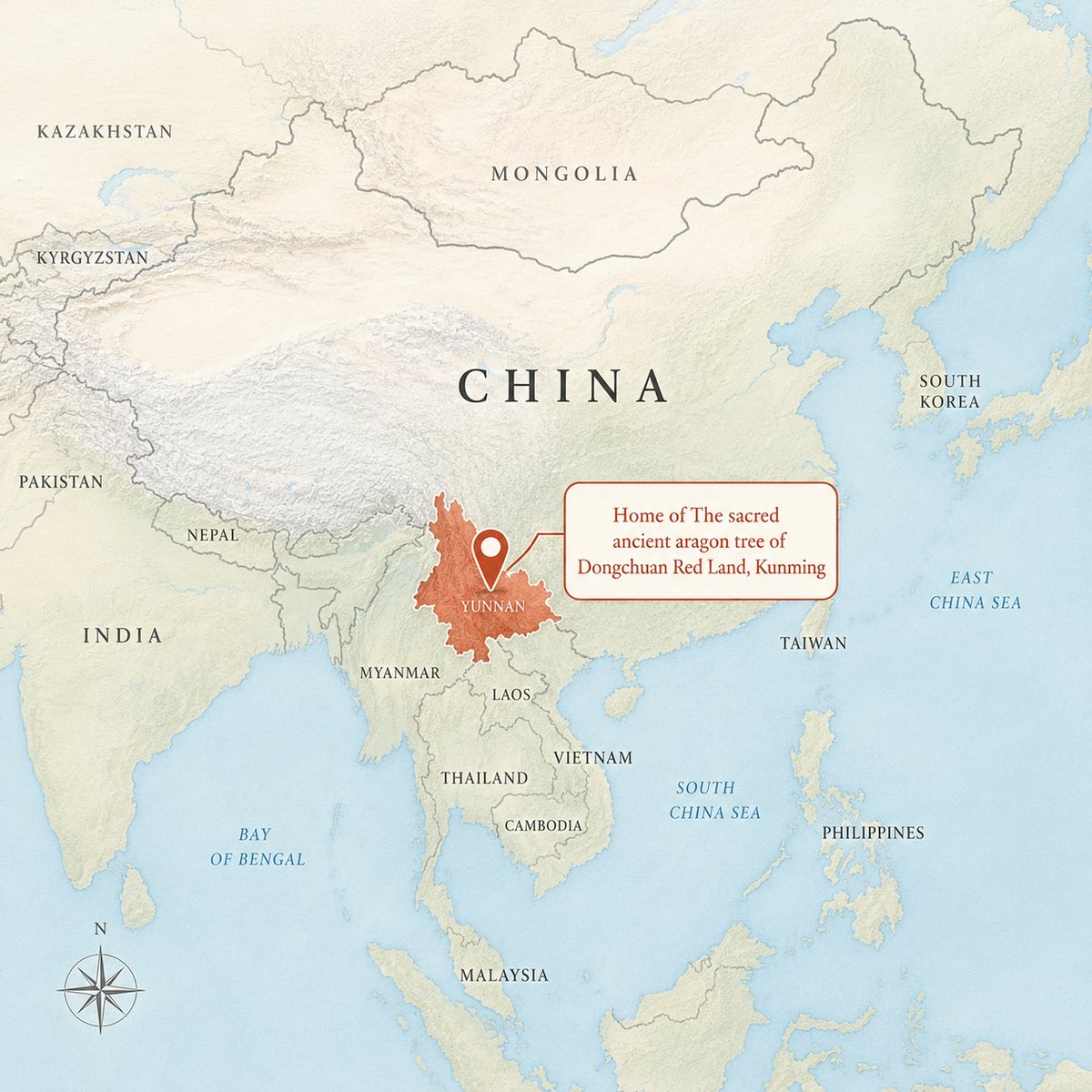
Our dragon blood trees come from Yunnan province in southern China - a high, sun-drenched region of limestone hills and red-earth plateaus on the edge of the Himalayas.
Yunnan is one of the most botanically rich places on Earth, and it has a deep connection to this tree. Near Kunming, on the famous red earth of Dongchuan, stands a revered ancient dragon tree believed to be around a thousand years old - honoured by local villagers as a symbol of vitality and protection, and now under formal judicial protection.
It's this landscape - and this species, Dracaena cochinchinensis - that our dragon blood extract is based on.
A Tree Unlike Any Other
Built for Survival
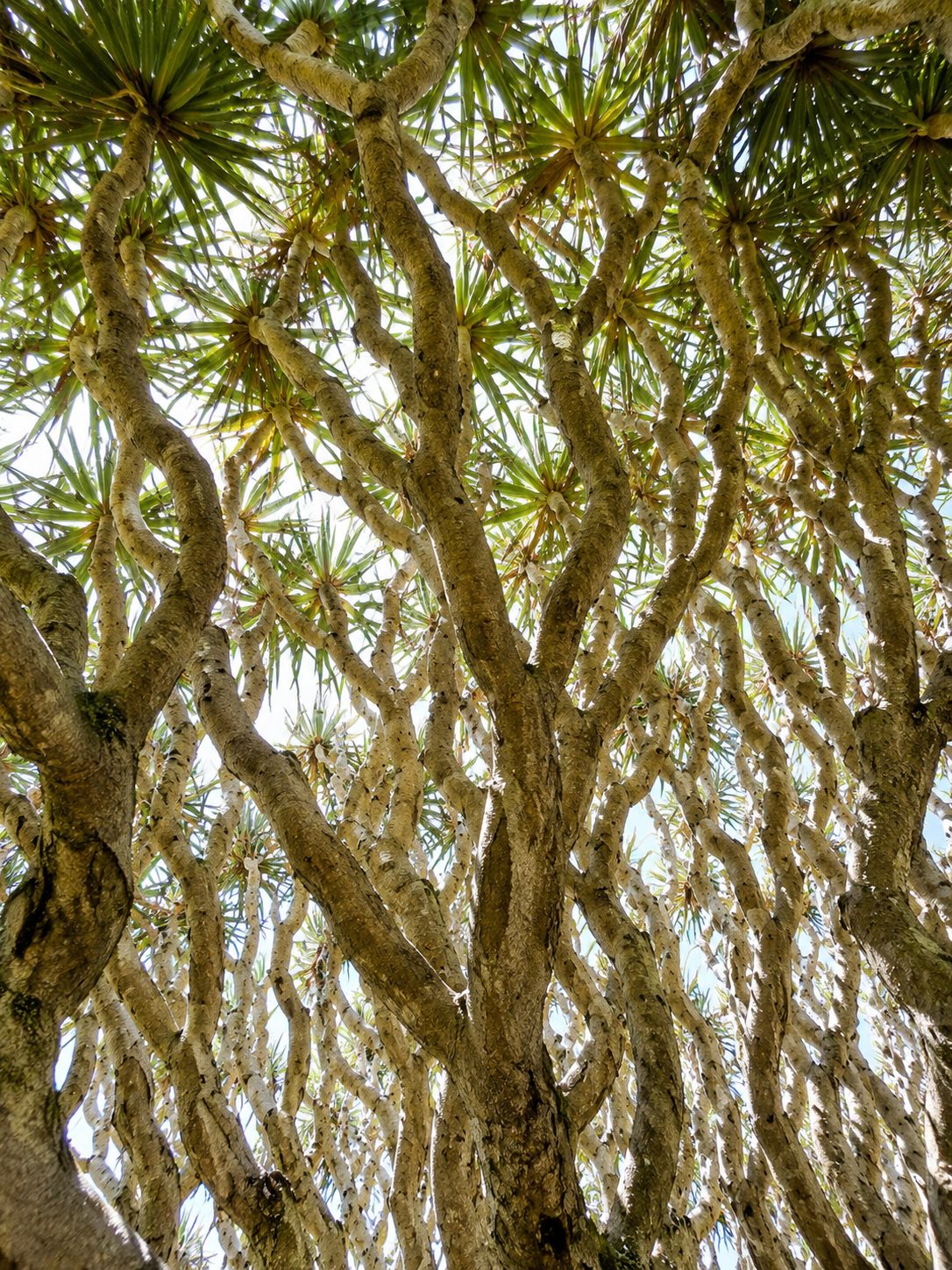
Dragon blood trees are monocots - botanical cousins of palms and grasses - yet unlike almost all of their relatives, their trunks thicken year after year through a rare form of secondary growth.
Every branch splits into two identical limbs, a pattern called dichotomous branching. Repeated over centuries, it produces the tree's iconic dome: a tight lattice of branches tipped with rosettes of leathery, water-conserving leaves.
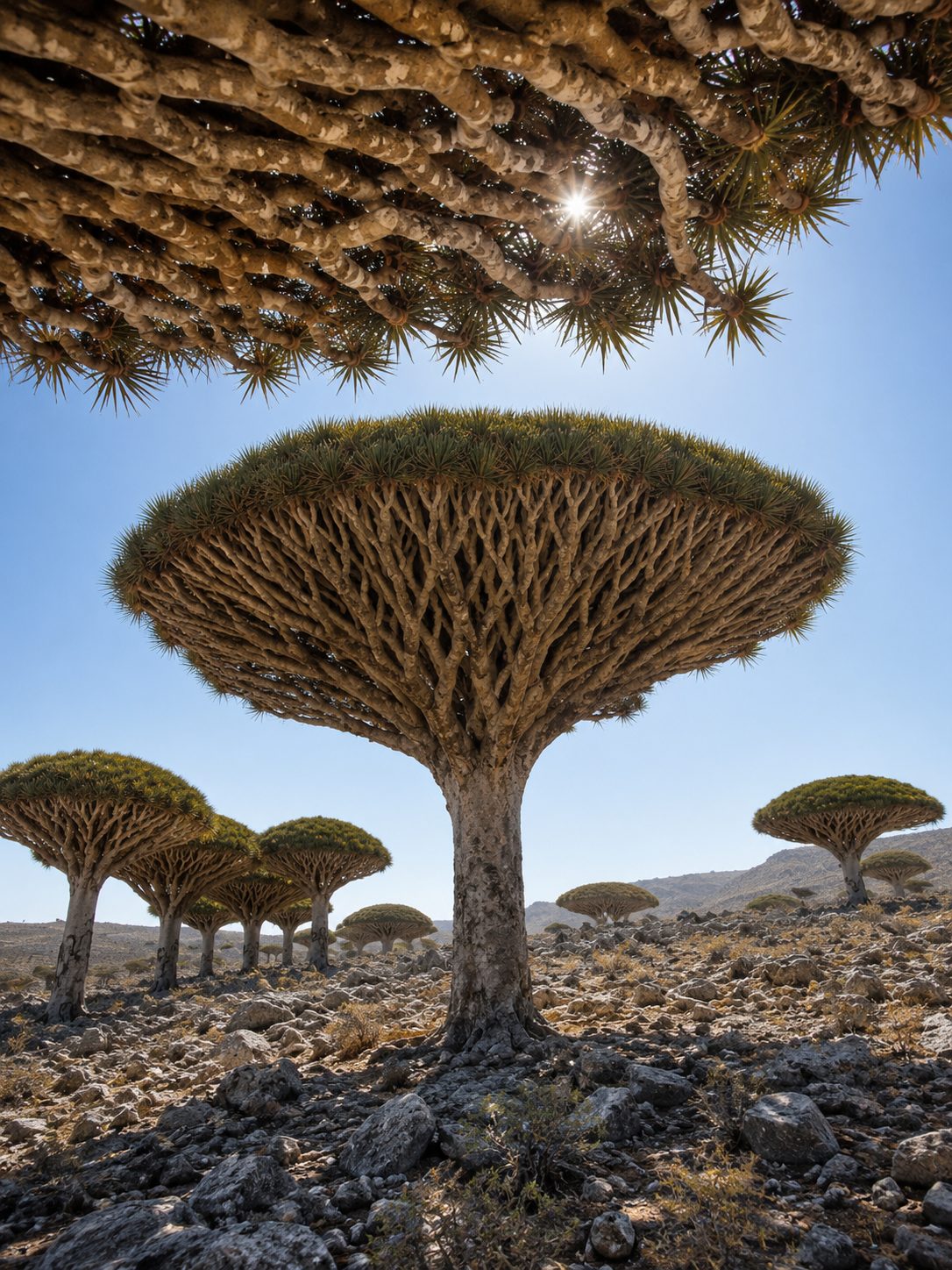
That umbrella crown shades the roots, captures moisture from mist and cloud, and lets the species thrive where few other trees survive at all. This hardiness - a metabolism built around protection and repair - is what makes the tree's resin so interesting for skin.
The Crimson Resin
When the bark is wounded, the tree seals the cut with a rich red resin - its own natural repair system, tapped for millennia without felling the tree. This is not a trend ingredient: what's changed isn't the resin, it's our ability to isolate and study the compounds responsible for what it does.
What's Actually in It
The resin isn't a single "active" - it's a concentrated mix of plant compounds, several of which have documented effects on skin.
What This Means for Your Skin Barrier
Your skin's barrier is the outermost layer that keeps moisture in and irritants out. When it's compromised - by over-exfoliation, harsh actives, weather, or simply age - skin gets reactive, dehydrated and dull faster.
Dragon's blood extract is studied for its ability to support that barrier function directly: helping reduce water loss through the skin, calming visible redness and irritation, and giving skin the conditions it needs to repair itself.
That's why it works as a daily layer rather than an occasional treatment - it supports a process instead of masking a symptom.
What It Does for Skin
Modern research into dragon's blood resin points to the same theme the tree itself embodies: protection and repair.
Gentle by Nature
Unlike retinoids or high-strength acids, dragon's blood extract is considered a gentle ingredient with a low irritation profile - which is part of why it suits sensitive, reactive and compromised skin as well as normal skin. As with any new ingredient, patch test before full use, particularly if you have a latex sensitivity, since the resin shares some botanical similarity with natural latex.
From Tree to Bottle
The takeaway: dragon's blood works because of what's actually in it - antioxidant-rich proanthocyanidins, repair-supporting taspine, and a broader phenolic profile that together calm, protect and help skin recover its own barrier function. Every drop of our formula starts there, paired with ceramide NP, a skin-identical lipid that helps repair and stabilise the barrier, and glossy ganoderma, a deeply moisturising mushroom extract.
Dragon trees grow slowly, and some island species are considered vulnerable. Our extract is based on the cultivated southern-China species - tapped from the bark, never felled.
Try Dragonblood Risk-FreeSources: Skincare.com (L'Oréal), "The Skin-Care Benefits of Dragon's Blood"; Clinikally, "Dragon's Blood Resin: The Ancient Skin Protector Making a Modern Comeback". This page is for educational purposes and reflects general ingredient research; individual results vary. Always patch test new products and consult a dermatologist for specific skin concerns.


